Which Country Has the Most Medical Tourism?
Which country has the most medical tourism? Compare Thailand, Turkey, India, Mexico and South Korea on patient volume, safety, cost and aftercare.
Published
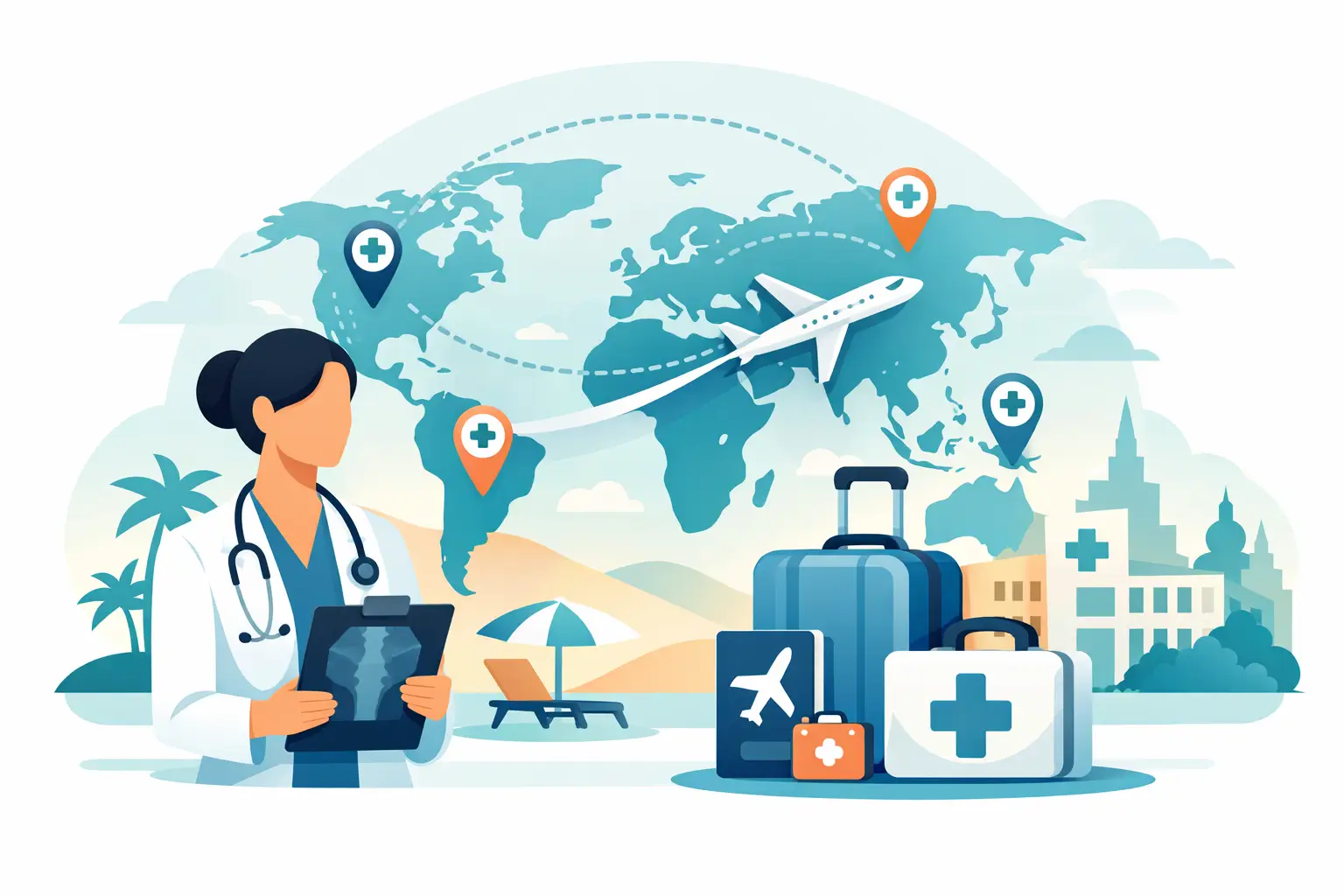
If you are asking which country has the most medical tourism, the honest answer is less straightforward than most headlines suggest. There is no single global scoreboard with perfectly aligned reporting, and different organizations count patients, procedures, and wellness travel in different ways (WHO - Medical tourism). Still, a small group of countries consistently leads the conversation: Thailand, Turkey, India, Mexico, and South Korea.
For patients planning surgery, IVF, hair restoration, or aesthetic treatment abroad, the better question is not only who attracts the highest volume. It is why those countries do, what kind of treatments they are known for, and whether their model matches the level of safety, support, and aftercare you expect.
🔑 Key Takeaways
- Thailand is most often named first in global medical tourism rankings, built on established private hospital groups and English-speaking international departments.
- Turkey leads on elective volume in hair transplantation, plastic surgery, dental care, and bariatric procedures, with Istanbul as its main hub.
- Rankings disagree because definitions differ — some count wellness visits and dental work, others only hospital admissions or surgical cases.
- High volume is not proof of quality. Crowded markets contain both accredited hospitals and low-standard operators competing on price.
- Choose the care model before the country: accreditation, surgeon credentials, complication planning, and structured aftercare decide your outcome.
Which country has the most medical tourism today?
In many global rankings and industry estimates, Thailand is often cited as one of the world leaders by patient volume. It built its reputation early, pairing internationally recognized private hospitals with hospitality standards that feel closer to premium travel than institutional medicine. For many international patients, especially those seeking elective procedures, Thailand became the reference point for what modern medical tourism could look like.
That said, Turkey is now one of the strongest contenders in real-world visibility and treatment volume, particularly in hair transplantation, plastic surgery, dental care, and bariatric procedures. India remains a major force as well, especially for complex treatments and price-sensitive patients who want advanced care at lower cost. Mexico is especially prominent for US patients because proximity matters. South Korea, meanwhile, is highly influential in cosmetic surgery and certain specialist areas, even if it may not always claim the largest overall numbers.
So if the question is purely which country has the most medical tourism, Thailand is very often named first. This article breaks down how the leading countries compare, and how each fits into the wider picture of international medical tourism. The goal is not to declare one winner, but to give patients a clear and balanced perspective on what each destination offers, and what questions to ask before making a commitment.
📊 Our Founding Team's Patient Data (2025-2026, prior to launching Wholecares)
- Overall patient satisfaction: A strong record across all treatment categories.
- International patients served: 1,200+ from 30+ countries.
- Accredited partner clinics: hold recognized international accreditations.
- Multilingual patient support: A health manager you can reach during treatment and recovery.
- Aftercare support: patients were supported through a structured follow-up program.
Why does the answer depend on how medical tourism is measured?
This is where many articles oversimplify. Some figures include wellness checkups, dental visits, cosmetic procedures, fertility care, and major surgeries together. Others focus only on hospital admissions. Some countries report international patient visits broadly, while others count only overnight or surgical cases. The distinction between wellness travel and clinical treatment is a large part of the confusion, as we explain in our guide to the difference between health tourism and medical tourism.
That matters because a country can appear to lead in one category and not another. Mexico, for example, benefits from a very high flow of short-distance US patients crossing the border for dental work, bariatric treatment, and other procedures. Turkey sees strong demand for aesthetic and hair transplant travel. India attracts patients seeking both affordability and specialist expertise. Thailand remains strong because it combines broad treatment capability with a polished patient experience.
For a patient making a serious medical decision, volume alone should never be treated as proof of quality. High demand can signal trust, experience, and mature infrastructure. It can also create crowded marketplaces where standards vary widely between providers.
Which countries lead global medical tourism?
Thailand
Thailand has long been one of the most recognized names in international healthcare travel. Its strength comes from a rare combination: established private hospital groups, English-speaking international departments, and a recovery experience that feels calm and well-managed. Patients often choose Thailand for cosmetic surgery, fertility treatment, orthopedic care, and health screenings.
Its advantage is not just cost. It is the sense of reassurance that the journey has been designed for overseas patients. For someone traveling far from home, that matters.
Turkey
Turkey has become one of the most active medical tourism destinations in the world. It is especially strong in hair transplantation (ISHRS - Practice Census), plastic surgery, obesity surgery, and dental treatment. Istanbul in particular has become a major center for international patients because of its clinic density, flight accessibility, and broad treatment packaging.
Turkey’s appeal is easy to understand. Prices are often considerably lower than in the US or UK, waiting times are shorter, and many providers have built structured systems for airport transfers, hotel stays, multilingual communication, and treatment coordination. For the right patient, it can offer a strong balance of value and quality.
The trade-off is that Turkey’s popularity has also created a crowded market. Accredited hospitals and highly skilled surgeons exist alongside lower-standard operators competing aggressively on price. This is exactly where careful screening becomes essential, and where our guide on whether Turkey is safe for surgery sets out what to verify before you book.
India
India is one of the largest medical tourism markets by scale and breadth. It is often chosen for cardiac care, orthopedics, fertility treatment, oncology, and other advanced specialties, in addition to elective procedures. Its private hospital sector includes highly trained physicians and internationally recognized institutions.
India stands out for affordability, but also for clinical depth. Patients who need complex treatment and want meaningful savings often consider it seriously. Still, distance, cultural differences, and the need for coordinated aftercare can make the journey feel more demanding for some travelers.
Mexico
For American patients, Mexico is one of the most practical destinations in medical tourism. Geography changes the calculation. A shorter flight, easier follow-up planning, and a familiar time zone can reduce stress significantly. Mexico is especially known for bariatric surgery, dentistry, cosmetic surgery, and fertility care.
Its biggest advantage is convenience. Its biggest challenge is variability. Some hospitals and surgical teams provide excellent care in a highly organized environment. Others may not offer the same degree of oversight, infrastructure, or recovery support international patients expect.
South Korea
South Korea is often associated with cosmetic surgery, dermatology, and advanced aesthetic medicine. It has a strong reputation for precision, innovation, and specialization. Patients who prioritize technique, refinement, and access to highly competitive urban medical centers often place South Korea high on their shortlist.
It may not always be presented as the highest-volume destination overall, but in beauty-focused medical travel, its influence is clear.
What matters more than the country ranking?
The strongest destination for you depends on your procedure, your comfort with travel, and the kind of support you want before and after treatment.
If you are considering IVF, surgeon expertise, lab standards, embryo policies, and continuity of communication matter more than national rankings. If you are planning bariatric surgery, start with the hospital accreditation, the surgeon credentials, the communication quality, the aftercare structure, and the complication planning. If those are strong, the destination becomes a feature of your journey rather than a risk factor.
If your focus is hair restoration or cosmetic surgery, surgeon-specific results and ethical consultation practices are more important than a country’s marketing visibility.
This is why experienced patients ask better questions. Is the hospital internationally accredited? Who handles pre-operative planning? What happens if recovery is slower than expected? Is complication insurance included? Will someone support you once you are back home?
Those details shape the real safety of medical travel far more than a headline about national volume.
How do you judge a top medical tourism destination wisely?
A leading country should offer more than low prices and glossy clinic photos. It should make space for informed, protected decisions.
Look first at accreditation and the clinical environment. Then look at surgeon credentials, case volume, and transparency around outcomes. After that, examine the patient journey itself. Premium medical travel is not only about the operating room. It includes consultation quality, language support, airport logistics, recovery planning, and structured follow-up (NHS - Going abroad for medical treatment).
This is where the facilitation model makes a measurable difference. A good facilitator screens hospitals before you ever speak to them, checks that the surgeon actually performs your procedure regularly, and puts the aftercare plan in writing. Our guide on how to judge international medical tourism companies covers the checks worth making. For those considering Turkey, the key is choosing the right facilitator and clinic rather than just the country itself.
For patients who want both quality and peace of mind, a trusted coordinator helps narrow choices to accredited hospitals, verified specialists, and treatment plans with clear protections built in. WholeCares, for example, is designed around that higher standard of guidance, with multilingual support, a per-patient complication insurance policy, and a 12-month aftercare framework that supports the journey long after the flight home.
So, which country should you actually choose?
If you want the most widely cited answer to which country has the most medical tourism, Thailand is often the leading name. If you are comparing where many elective international patients go now for procedures like hair transplantation, cosmetic surgery, and bariatrics, Turkey is one of the strongest global players. If your priorities are complexity and cost, India deserves attention. If you want easier access from the US, Mexico may feel more manageable. If your focus is aesthetic precision, South Korea is a serious contender. For a side-by-side view, see our overview of the world’s top medical tourism destinations.
The right destination is the one that combines clinical quality with the level of protection you need to feel confident. Medical travel should never feel like a gamble dressed up as a discount. The best choice is not simply the busiest country. It is the place where your procedure, your surgeon, your hospital, and your aftercare come together with clarity and care.
That is where real peace of mind begins.
Frequently Asked Questions
Which country has the most medical tourism patients?
Thailand is the country most often named first in global medical tourism rankings, thanks to its long-established private hospital groups and high volume of international patients. Turkey, India, Mexico and South Korea follow closely, and each leads in different treatment categories. Because organizations count patients, procedures and wellness travel differently, no single global scoreboard settles the question definitively.
Why do medical tourism rankings disagree with each other?
Rankings disagree because the definitions differ. Some figures bundle wellness checkups, dental visits, cosmetic work, fertility care and major surgery together, while others count only hospital admissions or overnight surgical cases. A country can therefore lead one measure and trail another. Always check what a ranking actually counts before treating it as evidence of clinical quality.
Which country is best for hair transplants and cosmetic surgery?
Turkey is among the strongest global players for hair transplantation, plastic surgery, dental treatment and bariatric procedures, with Istanbul acting as a major hub for international patients. South Korea is highly influential in cosmetic surgery and aesthetic medicine. In both cases, surgeon-specific results matter far more than the destination's overall patient volume.
Does high patient volume mean a country is safer for surgery?
No. High demand can signal experience, trust and mature infrastructure, but it also creates crowded marketplaces where standards vary widely between providers. Volume is a market signal, not a safety guarantee. Judge hospital accreditation, surgeon credentials, transparency around outcomes and the aftercare structure rather than relying on national rankings alone.
How do I choose the right medical tourism destination for me?
Start with your procedure, not the country. Confirm the hospital holds recognized international accreditation, verify the surgeon's credentials and case volume, and ask who handles pre-operative planning, complication cover and follow-up once you return home. The right destination is the one where your surgeon, hospital and aftercare plan all meet your standard.
Recommended Reading
This information is for informational purposes only and does not constitute medical advice. Please consult your physician.
