Hair Transplant Recovery Timeline Guide
This hair transplant recovery timeline guide explains what to expect week by week, from swelling and shedding to growth, healing, and final results.
Published
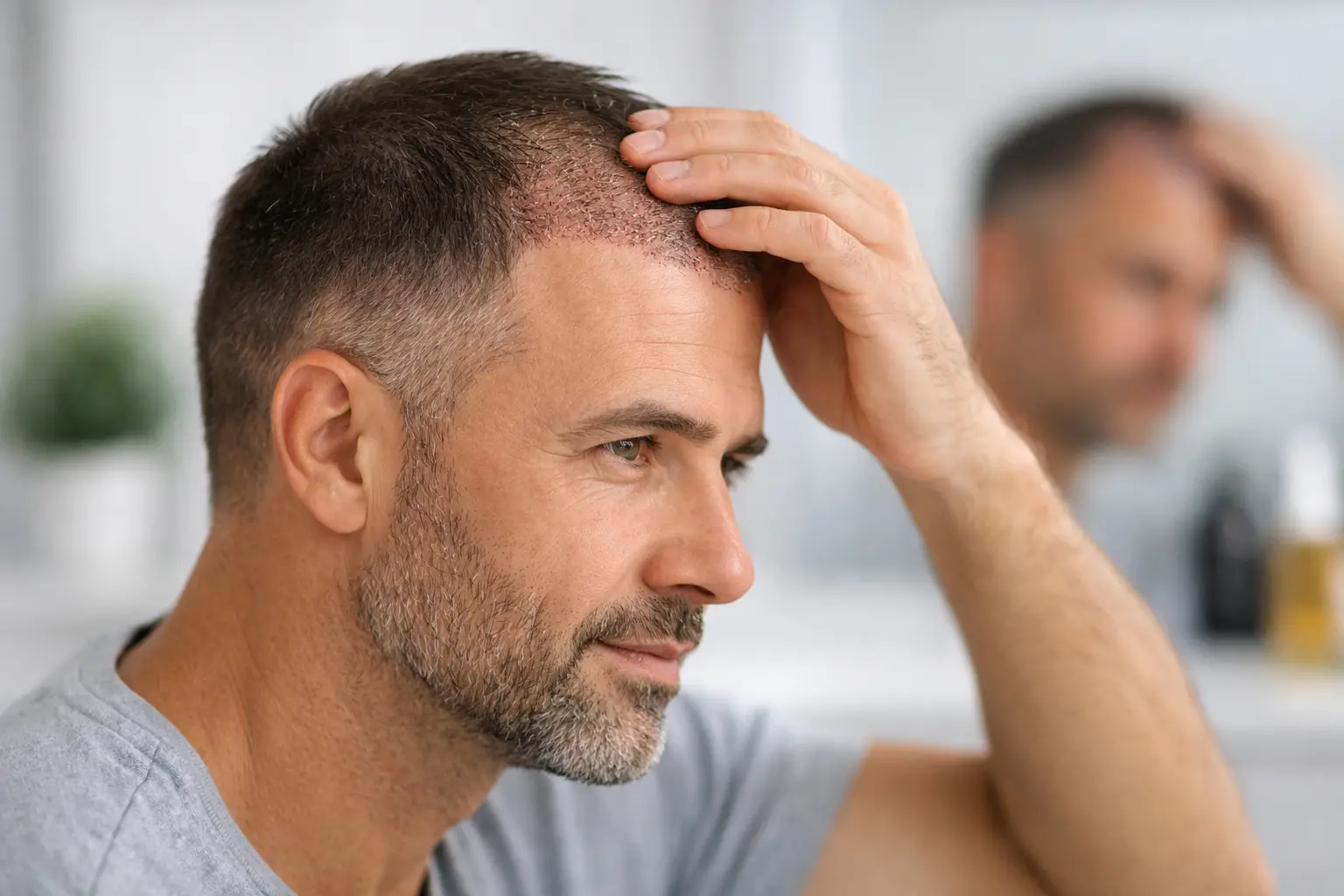
The morning after a hair transplant, most patients ask the same question: Is this normal? A few tiny scabs, some swelling at the forehead, a tender donor area, and a mirror that does not yet reflect the result you traveled for can feel unsettling. A clear hair transplant recovery timeline guide helps replace that uncertainty with perspective. Healing is not a straight line, and visible progress often arrives later than expected.
For patients planning treatment abroad, that clarity matters even more. Recovery shapes not only your appearance, but also your return flight, work schedule, exercise routine, and confidence during the first few months. The good news is that modern hair restoration recovery is usually manageable when the procedure is performed by an experienced specialist and followed by structured aftercare.
Key Takeaways
- The first 72 hours are the most delicate phase, when grafts settle and careless handling can compromise even a technically excellent transplant.
- Shedding between weeks two and four is normal. Transplanted hairs fall out as shock loss while the follicles remain in place.
- Early regrowth begins around months three to four, often fine, soft, and uneven before it thickens.
- Six months is a midpoint, not the finish line. Most patients see the majority of their result at 12 months, with the crown maturing slowest.
- Recovery quality depends on technique, aftercare discipline, and individual biology, so no two timelines are identical.
What happens in the first days of hair transplant recovery?
The first 72 hours are the most delicate phase. During this window, the newly implanted grafts are settling into place, and the donor area is beginning to heal. You may notice pinpoint crusts around the transplanted follicles, mild tightness, redness, and some swelling that can move from the scalp toward the forehead or around the eyes.
This stage looks more dramatic than it usually feels. Most patients describe discomfort as mild rather than severe, especially with FUE and DHI techniques. Sleeping with your head elevated, avoiding friction, and following your washing instructions precisely are the details that protect the outcome. Even a technically excellent transplant can be compromised by careless handling in the first few days.
If you are recovering in Istanbul before traveling home, this early period is where coordinated support becomes especially valuable. Patients tend to feel calmer when they know exactly how to wash, sleep, and move without disturbing the grafts.
Days 1 to 3
Expect the scalp to feel sensitive and slightly swollen. Tiny scabs form around each graft, which is a normal part of healing. You should not pick them, rub the area, or wear anything that drags across the grafts.
Most surgeons advise avoiding alcohol, smoking, strenuous exercise, saunas, and direct sun exposure. These restrictions can feel inconvenient, but they support circulation, reduce inflammation, and lower the chance of complications. This is also the period when patients are most likely to overanalyze every detail. Minor redness and crusting are expected.
Days 4 to 7
By the end of the first week, swelling usually starts to resolve. The donor area often feels less sore, and washing becomes easier. Scabs may begin to soften and gradually loosen, depending on your surgeon’s protocol.
Appearance can still be socially noticeable, especially if a large area was treated or if your skin tends to stay pink after minor irritation. Some patients feel ready to return to desk work within a few days, while others prefer a full week away from meetings and public-facing activity. It depends on the extent of the transplant, your comfort level, and how visible the recipient area is.
What does the week-by-week hair transplant recovery timeline look like?
The second week often brings visible improvement. Most crusting fades, and the grafts become more secure. Redness may still linger, particularly in fair or sensitive skin, but the scalp usually looks calmer than it did during the first few days.
This is also when expectations need careful management. Many patients assume that once healing looks better on the surface, they are moving directly toward fuller hair. In reality, the next phase can feel emotionally confusing.
Weeks 2 to 4
Around this point, transplanted hairs commonly begin to shed. This is known as shock loss, and it is one of the most misunderstood parts of the process. The follicles remain in place, but the hair shafts often fall out before new growth begins.
For someone who has invested significant time, money, and hope into treatment, shedding can feel alarming. It is usually normal. The scalp may look similar to how it did before the transplant, or even a little thinner for a while. That does not mean the procedure has failed. If you want to understand the difference between temporary shedding and genuine problems, our guide on why hair transplants fail explains the warning signs in more detail.
At the same time, the donor area continues to settle. Small extraction points become less noticeable, though complete blending takes longer in some patients. If you wear your hair very short, subtle signs can remain visible for several weeks.
Month 2
This is often the quietest stage. The scalp may look relatively normal, but there is usually little visible new growth yet. Some patients experience small pimples or ingrown hairs as follicles re-enter the growth cycle. These should be handled gently and according to medical advice, not squeezed or picked.
Patience is the real challenge here. There is not much to admire in the mirror, but important biological work is happening beneath the skin. Blood supply is stabilizing, follicles are transitioning phases, and the foundation for later growth is being established.
Months 3 to 4
Early regrowth typically begins during this period. New hairs often appear fine, soft, and somewhat uneven. Density is not impressive yet, and texture may be different from your native hair at first.
This is the point where morale tends to improve. You finally see evidence that the process is moving forward. Still, growth is patchy early on, and one side may seem ahead of the other. That asymmetry is common and usually temporary.
Months 5 to 6
By six months, many patients can appreciate a meaningful cosmetic change. The transplanted area starts to look fuller, hair shafts become stronger, and styling becomes easier. For hairline work, shape and framing are usually more apparent now.
That said, six months is not the finish line. It is better understood as an encouraging midpoint. Crown areas, in particular, often mature more slowly than the front. Patients who expect final density at this stage may feel disappointed even when recovery is progressing well.
Months 7 to 9
This phase often brings substantial thickening. Hairs become coarser and better synchronized in growth. The transplant begins to integrate more naturally with surrounding hair, which is when many patients feel they can truly enjoy the transformation.
For those balancing treatment with a professional or social life, this is usually when the procedure stops feeling like a recent event and starts feeling like a personal upgrade. Friends may notice you look fresher or younger without immediately identifying why.
Months 10 to 12
By the one-year mark, most patients see the majority of their result. Hair has more body, the hairline appears more settled, and the overall pattern looks more natural. Final maturation can continue beyond 12 months in some cases, especially in the crown or in patients with slower growth cycles.
This is why structured aftercare and complication cover matters. Recovery does not end when you leave the clinic. The best patient experience includes support that continues long enough to assess progress properly, answer concerns, and distinguish normal variation from issues that require attention.
What can slow healing or affect results?
A hair transplant is not just about what happens in the operating room. Recovery quality is shaped by technique, aftercare discipline, and your individual biology. The method itself plays a role too, which is why it helps to understand how FUE and DHI techniques differ before you plan your procedure. Smoking, poor scalp hygiene, sun exposure, intense exercise too soon, and failure to follow washing instructions can all interfere with early healing.
There are also factors patients cannot fully control. Some people retain redness longer. Some shed earlier. Some see growth at month three, while others wait until month four or five for convincing progress. Hair caliber, scalp characteristics, the size of the session, and the area being treated all influence the timeline.
This is where honest medical guidance matters. A trustworthy team does not promise identical timelines for everyone. It explains what is typical, what is possible, and where your case may differ.
When should you be concerned?
Mild redness, scabbing, itching, shedding, and temporary uneven growth are usually part of normal recovery. Warning signs are different. Increasing pain, spreading warmth, pus, significant bleeding, fever, or a foul odor should prompt immediate medical review. So should sudden trauma to the graft area in the early days.
Less urgent but still worth discussing are concerns like prolonged severe redness, unusual donor-area healing, or no visible growth long after your expected timeline. Sometimes the answer is simply that your recovery is slower than average. Sometimes it requires a closer look.
That is why many international patients look for more than a clinic appointment. They want a structured care pathway with ongoing access to professional advice, especially after they return home. Our international patient safety guide sets out what accredited care and protected follow-up should include.
What is the emotional side of hair transplant recovery?
Hair restoration is physical, but it is also personal. The hardest part for many patients is not discomfort. It is living through the temporary stages that do not yet reflect the final result. The scalp can look better, then worse, then better again. Progress can feel invisible before it becomes obvious. For a fuller picture of the procedure itself, our overview of hair transplant and restoration explained covers how the treatment works from consultation to regrowth.
A calm, informed mindset helps. Take photos in consistent lighting once a month instead of checking the mirror several times a day. Follow your care plan closely. Give the follicles time to move at a biological pace, not an emotional one.
When the process is managed with surgical expertise, accredited clinical standards, and attentive aftercare, recovery becomes far less intimidating. It becomes what it should be: a guided transition toward a result that reveals itself gradually, then all at once.
Give your recovery the same care you gave your decision. Hair growth rewards patience, and the patients who understand the timeline usually experience the journey with far more confidence.
Frequently Asked Questions
How long does hair transplant recovery take?
Surface healing takes about one to two weeks, with scabs and swelling fading in that window. Full results, however, take roughly 12 months. Transplanted hair sheds in the first weeks, regrows from month three or four, thickens by six months, and matures through the crown by the one-year mark.
Is it normal for transplanted hair to fall out after surgery?
Yes. Between weeks two and four, most transplanted hairs shed in a process called shock loss. The follicles stay in place; only the temporary hair shafts fall out before new growth begins. The scalp may briefly look thinner than before, but this does not mean the transplant has failed.
When will I see final results from a hair transplant?
Meaningful cosmetic change is usually visible by six months, but this is a midpoint rather than the finish line. Most patients see the majority of their result by 12 months, and maturation can continue beyond a year, especially in the crown or in patients with slower growth cycles.
How soon can I return to work after a hair transplant abroad?
Many patients return to desk work within a few days, while others prefer a full week away from meetings. It depends on how large the treated area is, your comfort level, and how visible the recipient site is. Public-facing roles may warrant waiting until redness and crusting settle.
What are the warning signs of a problem during recovery?
Mild redness, scabbing, itching, and shedding are normal. Seek immediate medical review for increasing pain, spreading warmth, pus, significant bleeding, fever, a foul odor, or sudden trauma to the grafts. Prolonged severe redness or no visible growth well past your expected timeline is also worth discussing.
Recommended Reading
This information is for informational purposes only and does not constitute medical advice. Please consult your physician.
