Hair Transplant and Restoration Explained
Hair transplant and restoration can deliver lasting, natural results when surgeon skill, planning, donor quality, and aftercare all align.
Published
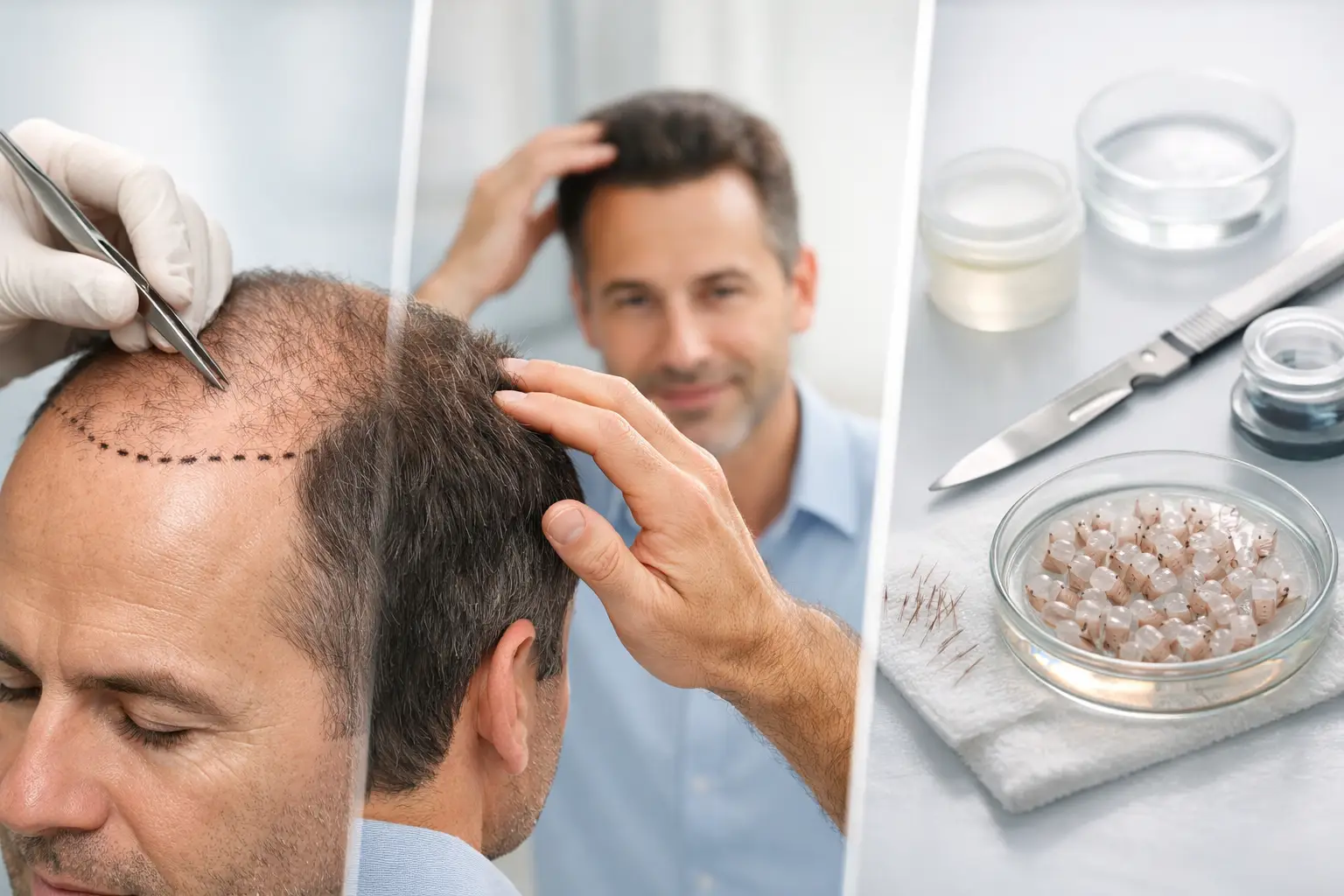
A receding hairline rarely changes overnight. More often, it becomes noticeable in photos, under bright bathroom lighting, or during an ordinary haircut when the mirror starts telling a different story. That is why hair transplant and restoration is rarely just about hair. For many patients, it is about recovering familiarity, confidence, and a sense of control over how they present themselves.
The challenge is that this field attracts both excellent specialists and aggressive marketing. Results can look excellent when planned well, and disappointing when corners are cut. If you are considering treatment, the most valuable question is not simply whether a transplant works. It is whether the right approach, in the right hands, is right for you.
Key Takeaways
- Transplanted follicles are taken from DHT-resistant areas, so they keep growing in their new location for life.
- Donor quality, hairline design, angle placement, and graft survival matter more than the raw graft count.
- FUE avoids a linear scar and suits shorter styles, while FUT can supply more grafts but leaves a linear scar.
- Transplanted hair sheds in the first weeks; new growth builds over months, with full maturation up to 12 months.
- Surgeon judgment and structured aftercare, not a marketed technique name, are what separate an adequate result from an exceptional one.
What does hair transplant and restoration really involve?
Hair transplantation is one of the most widely discussed cosmetic procedures in the world, yet it remains widely misunderstood. Patients often arrive at their first consultation with strong motivation but limited clarity about what the procedure involves, what kind of result is realistic, and how the quality of care affects the outcome.
The first practical step is choosing the right clinician. Patients should look for certified dermatologists or plastic surgeons with a focused specialization in hair restoration (ISHRS - Find a doctor), and should confirm who will actually perform the extraction and implantation rather than assuming the named surgeon does every step.
📊 Our Founding Team's Patient Data (2025-2026, prior to launching Wholecares)
- Overall patient satisfaction: A strong record across all treatment categories.
- International patients served: 1,200+ from 30+ countries.
- Accredited partner clinics: hold recognized international accreditations.
- Aftercare support: hair transplant patients were supported through a structured 12-month follow-up program.
- Partner surgeon experience: Board-certified specialists with extensive experience.
Hair transplantation is a surgical procedure that moves hair follicles from one area of the body, typically the back or sides of the scalp, to areas affected by thinning or baldness. The transplanted follicles are selected because they are genetically resistant to DHT, the hormone responsible for androgenetic alopecia, which is the most common form of hair loss in both men and women (Mayo Clinic - Hair loss).
Natural results depend on design, graft handling, angle placement, density planning, and a realistic understanding of what your donor supply can support. That is where specialist judgment matters far more than sales language.
Who is a good candidate for hair transplant and restoration?
For patients researching hair transplant and restoration, the process can feel overwhelming at first. There are multiple methods, conflicting opinions online, varying price structures, and clinics that make promises ranging from conservative to clearly exaggerated. This guide is designed to cut through that noise and provide a medically grounded, practical understanding of how hair restoration works, what it involves, and what to consider before committing to treatment (ISHRS - About hair restoration).
Donor quality is one of the biggest deciding factors. If the donor area is strong and dense, the surgeon has more flexibility. If it is limited, every graft must be used with discipline. Hair caliber, curl pattern, contrast between hair and scalp, and previous procedures also affect what can realistically be achieved.
This is also why a good consultation should feel more like medical planning than a sales call. You should hear honest discussion about limitations, future loss, and whether non-surgical treatment should be part of the plan. If a clinic promises very high graft numbers without careful assessment, caution is warranted.
When surgery may not be the first step
Not every patient should move straight to surgery. In some cases, medical treatment may help stabilize ongoing loss first. For others, scalp conditions, unrealistic expectations, or poor donor reserves make surgery less suitable.
This is not disappointing news. It is protective guidance. The right clinic will prioritize the long-term outcome, not just the immediate booking.
What are the main hair transplant techniques and how do they differ?
Most modern procedures center on follicular unit extraction, often called FUE, and follicular unit transplantation, known as FUT. Both can produce strong outcomes. The right choice depends on your hair characteristics, scarring preferences, styling habits, and the extent of restoration needed.
In FUE, individual follicular units are extracted one by one using a micro-punch tool, typically 0.6mm to 1.0mm in diameter (AAD - Hair transplant). Each graft is then placed into tiny incisions in the recipient area. It is popular because it avoids a linear scar and usually appeals to patients who prefer shorter hairstyles. It also requires precise technique during extraction and placement, since graft quality can be compromised if handled poorly.
FUT removes a strip of tissue from the donor region, from which follicular units are then dissected. It can be useful when a larger number of grafts is needed and may preserve donor efficiency in certain cases. The trade-off is the linear scar, which may or may not matter depending on how you wear your hair.
Some clinics also discuss DHI, or direct hair implantation, as a separate option. In practice, this is often a variation in implantation method rather than a completely different philosophy of treatment. What matters more than the label is the surgeon’s experience, planning approach, and consistency of results.
What do natural hair transplant results depend on?
The most convincing transplant is the one nobody notices as a transplant. People may think you look fresher, younger, or more rested without being able to identify why. That level of result comes from restraint and precision.
The hairline is a good example. If it is placed too low, too straight, or too densely packed at the front, it can look artificial and age poorly over time. A skilled surgeon designs a hairline that respects facial proportions, ethnicity, age, and likely future hair loss. That often means avoiding the temptation to create the lowest possible line.
Density matters too, but not in the way many patients assume. A result can appear full without every square inch being packed at maximum graft count. Strategic placement, correct angulation, and good graft survival create a more believable effect than chasing numbers alone.
Why graft counts can be misleading
Many patients start comparisons with one figure: how many grafts are included, and how that shapes the cost. That is understandable, but it is not enough to judge quality. A larger number is not automatically better if grafts are overharvested, wasted, or poorly distributed.
A premium treatment plan focuses on how grafts are used, whether the donor area is protected, and how the result will hold up years from now. Hair restoration is not only about today’s photo. It is about preserving options for the future.
What does hair transplant recovery and growth look like?
Recovery is usually manageable, but patience is part of the process. In the first days, mild redness, swelling, and scabbing are common. Most patients return to non-strenuous routines fairly quickly, although exact guidance depends on the technique used and the surgeon’s protocol.
The first few weeks can be emotionally awkward because transplanted hairs often shed before new growth begins. This is expected. It does not mean the procedure has failed. New growth usually starts to appear after several months, with visible improvement building gradually. Final maturation can take up to 12 months, and sometimes longer for the crown.
This long timeline is one reason structured aftercare matters. Patients feel more secure when they know what is normal, what requires attention, and who will answer questions once they are back home. For international patients especially, support should not end at airport pickup or discharge.
How does medical travel change the decision?
For many patients, choosing treatment abroad is not just about price. It is about accessing experienced specialists, efficient scheduling, and a more complete care journey. Istanbul has become a recognized destination in this field because of surgeon volume, clinic infrastructure, and competitive package value.
Still, medical travel raises fair concerns. Who verifies the clinic? What standards are in place? What happens if you need support after you return? These are not small details. They are central to a safe decision.
That is why the facilitation model matters when it is done properly. For patients considering surgery abroad, the method matters less than the team performing it. An experienced, methodical surgeon working in an accredited hospital with a disciplined support team will often deliver a better result than a clinic that advertises a specific method as a marketing advantage.
A service such as WholeCares can reduce risk by connecting patients with accredited hospitals and specialist teams while also organizing the practical side of treatment, from consultation management to multilingual support and structured aftercare. That kind of aftercare structure is not available everywhere, but it should be expected from any serious provider. Patients should ask what happens after the procedure before agreeing to it. Meaningful aftercare covers the careful scalp washing required in the first weeks and continued monitoring of graft survival and growth over the months that follow.
What questions should you ask before you commit?
A strong clinic should welcome informed questions. Ask who designs the hairline, who performs extractions and implantation, how donor capacity is assessed, and what happens if your future loss progresses. Ask to see results that resemble your hair type and level of loss, not only the clinic’s best-case transformations.
You should also ask about complication planning, follow-up access, and exactly what the package includes. Transparent pricing is not a luxury in medical travel. It is part of ethical care, and hidden costs are one of the clearest warning signs. If answers feel vague, rushed, or overly polished, trust that instinct.
The best decision often comes down to one simple standard: do you feel guided, or do you feel sold to? Hair transplantation is not a miracle. It is a medical procedure with artistic and biological demands. But when it is performed carefully, planned thoughtfully, and supported fully, it can restore more than hair. It can restore the way a person feels when they look in the mirror. That is a result worth protecting.
Our Founding Team's Track Record (Prior to Launching Wholecares)
Prior to launching Wholecares, our founding team guided 1,200+ international patients from 30+ countries through hair restoration journeys. WholeCares follows the same model: every procedure is performed at accredited partner hospitals by specialists with extensive experience, and includes 12-month structured aftercare and Medical Complication Insurance.
The right path is not the cheapest offer or the fastest promise. It is the one built on clinical skill, honest planning, and support that stays with you long after the procedure day has passed.
Frequently Asked Questions
How long does it take to see results after a hair transplant?
Transplanted hairs usually shed within the first few weeks, which is normal and does not mean the procedure failed. New growth typically begins after several months, with visible improvement building gradually. Final maturation can take up to 12 months, and sometimes longer for the crown area.
What is the difference between FUE and FUT hair transplants?
FUE extracts individual follicular units one by one with a micro-punch, avoiding a linear scar and suiting shorter hairstyles. FUT removes a strip of donor tissue, which can help when many grafts are needed but leaves a linear scar. The right choice depends on hair type, styling habits, and restoration extent.
Is a higher graft count always better for a hair transplant?
No. A larger graft number is not automatically better if follicles are overharvested, wasted, or poorly distributed. Natural results depend more on hairline design, correct angulation, graft survival, and protecting the donor area than on raw numbers. Careful planning matters more than chasing the highest possible graft count.
Who is a good candidate for a hair transplant?
Good candidates usually have a strong, dense donor area, stable or manageable hair loss, and realistic expectations. Hair caliber, curl pattern, and scalp condition also matter. Some patients benefit from medical treatment first to stabilize loss, and a careful consultation should honestly assess whether surgery is the right step.
Is it safe to get a hair transplant abroad?
Hair transplants abroad can be safe when performed at accredited hospitals by experienced specialists with structured aftercare. Verify the clinic's credentials, ask who performs extraction and implantation, and confirm follow-up support after you return home. Transparent pricing and clear complication planning are signs of an ethical, well-run provider.
Recommended Reading
This information is for informational purposes only and does not constitute medical advice. Please consult your physician.
