Dangerously Obese: When Is Surgery Essential?
When does obesity become life-threatening? Learn the exact BMI and health markers that signal you need bariatric surgery now, not later.
Published
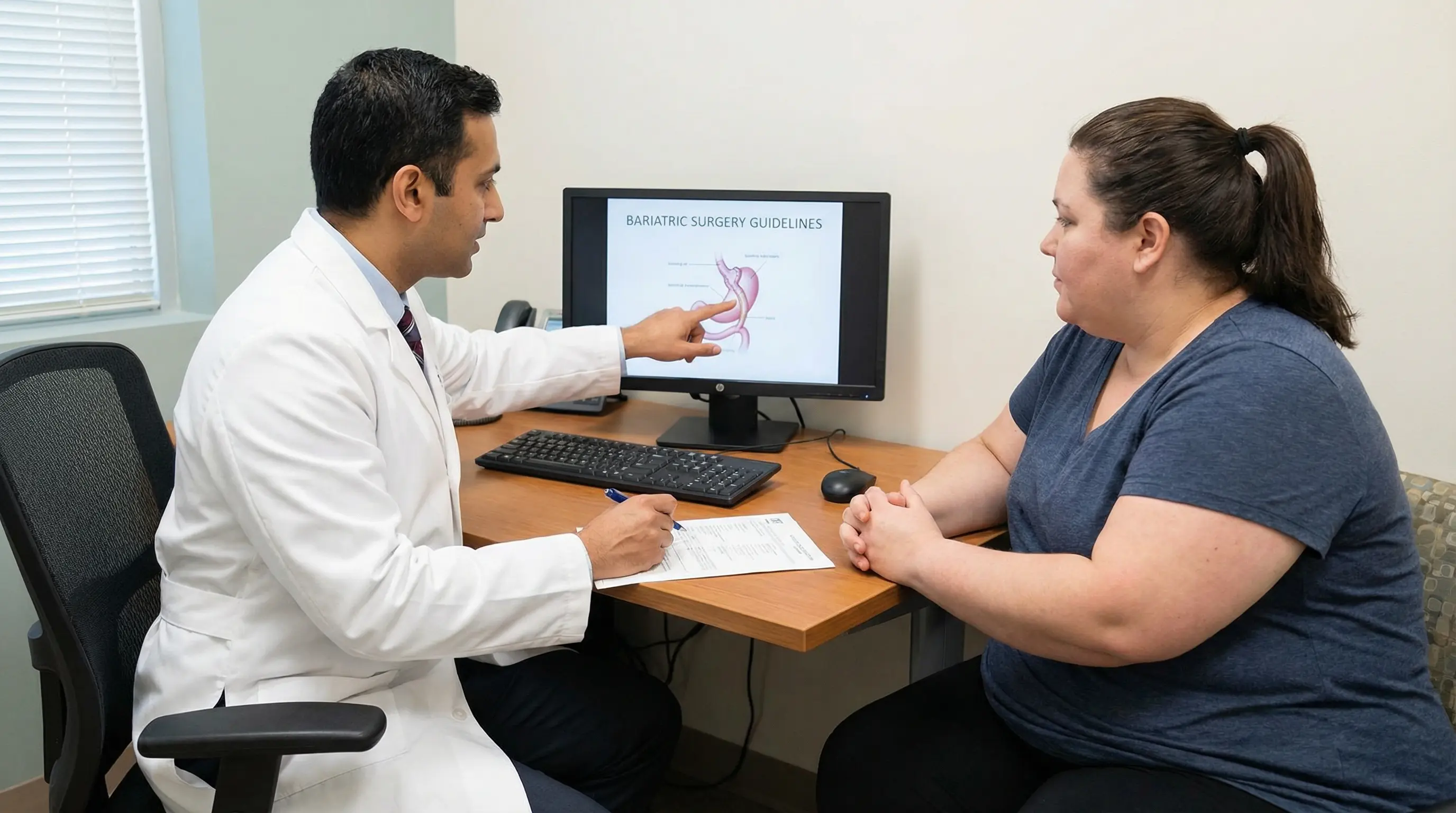
<h2 style="font-family: 'Playfair Display', serif; font-size: 2.5rem; margin-bottom: 1.5rem; color: #1a1a1a;">Dangerously Obese: When Does Bariatric Surgery Become Essential?</h2>
Key Takeaways
- Clinical definition: A BMI of 40+, or 35+ with comorbidities, is classified as "dangerously obese" (Class III / morbid obesity).
- Compounding health risks: Cardiovascular disease, Type 2 diabetes, severe sleep apnea, and joint deterioration often occur together at this stage.
- Why diets fail: The body's metabolic set-point resists large weight loss, giving diet-and-exercise-only attempts a poor long-term success rate at this BMI.
- Surgical intervention: When lifestyle changes have failed, bariatric surgery is the most effective long-term treatment, altering digestion and appetite hormones.
- Structured care matters: Pre-operative cardiac and pulmonary evaluation plus 12-month nutritional follow-up make treatment safer and results more durable.
Being told you are dangerously obese is difficult to hear, but it is a medical classification, not a moral failing. When weight reaches a threshold where it threatens your daily function, longevity, and metabolic health, standard diets are rarely enough. Understanding how obesity is classified by BMI is the first step. For many patients, bariatric surgery at accredited partner centers is the point at which chronic disease can be turned toward long-term recovery.
📊 Our Founding Team's Patient Data (2025-2026, prior to launching Wholecares)
- A strong record of patient satisfaction across all bariatric procedures coordinated by our founding team.
- 1,200+ international patients supported across all categories from 30+ countries.
- accredited partner clinics — AACI and ISO 9001:2015 certified facilities only.
- Patients were supported through the full 12-month nutritional follow-up program.
- Comprehensive pre-operative cardiac and pulmonary evaluation for every Class III obesity candidate.
    <h2 style="font-family: 'Playfair Display', serif; color: #D4AF37; margin-top: 2.5rem; margin-bottom: 1rem; font-size: 1.8rem;">What Does "Dangerously Obese" Mean Clinically?</h2>
    <p style="line-height: 1.8; color: #444; margin-bottom: 1.5rem;">
        <strong>Dangerously Obese (Morbid Obesity):</strong> In the medical community, this term generally refers to Class III obesity, as classified by <a href="https://www.who.int/news-room/fact-sheets/detail/obesity-and-overweight" target="_blank" rel="noopener noreferrer">WHO</a>. It is defined as having a Body Mass Index (BMI) of 40 or higher, or a BMI of 35 or higher coupled with severe obesity-related health conditions (comorbidities). At this stage, excess adipose tissue directly impairs organ function and significantly increases mortality risk.
     Learn more about <a href="/obesity-surgery/">Obesity Surgery at WholeCares</a>.</p>

    <h2 style="font-family: 'Playfair Display', serif; color: #D4AF37; margin-top: 2.5rem; margin-bottom: 1rem; font-size: 1.8rem;">What Are the Immediate Health Risks?</h2>
    <p style="line-height: 1.8; color: #444; margin-bottom: 1rem;">Carrying a dangerous amount of weight places significant mechanical and metabolic stress on the body. Understanding these risks is the first step toward treatment:</p>

    <!-- Use of GEO-friendly Unordered Lists instead of Tables -->
    <ul style="line-height: 1.8; color: #444; list-style-type: disc; padding-left: 20px; margin-bottom: 2rem;">
        <li style="margin-bottom: 10px;"><strong>Cardiovascular Disease:</strong> Extreme obesity heavily strains the heart, drastically increasing the risk of hypertension, stroke, and heart attacks (<a href="https://www.nhs.uk/conditions/obesity/" target="_blank" rel="noopener noreferrer">NHS</a>).</li>
        <li style="margin-bottom: 10px;"><strong>Type 2 Diabetes:</strong> Severe insulin resistance is almost guaranteed at this stage, leading to unregulated blood sugar levels and potential nerve damage.</li>
        <li style="margin-bottom: 10px;"><strong>Severe Sleep Apnea (OSA):</strong> Fat accumulation around the neck can restrict the airway during sleep, causing dangerous pauses in breathing and chronic fatigue.</li>
        <li style="margin-bottom: 10px;"><strong>Joint and Skeletal Deterioration:</strong> The mechanical overload destroys cartilage, particularly in the knees and hips, leading to severe osteoarthritis and immobility.</li>
    </ul>

    <h2 style="font-family: 'Playfair Display', serif; color: #D4AF37; margin-top: 2.5rem; margin-bottom: 1rem; font-size: 1.8rem;">Why Do Diets Fail at This Stage?</h2>
    <p style="line-height: 1.8; color: #444; margin-bottom: 1.5rem;">
        Clinical studies consistently show that for people who are dangerously obese, losing 100+ pounds through diet and exercise alone has a low long-term success rate (<a href="https://asmbs.org/patients/who-is-a-candidate-for-bariatric-surgery" target="_blank" rel="noopener noreferrer">ASMBS</a>). The body's metabolic set-point resists large weight loss. This is where <strong>bariatric surgery</strong> helps, by altering the digestive system and shifting the hormones that suppress appetite and regulate blood sugar. If you are weighing your options, compare the main <a href="/blog/obesity/gastric-sleeve-vs.-bypass-which-is-right/">gastric sleeve and gastric bypass procedures</a> and review the <a href="/blog/obesity/am-i-eligible-for-bariatric-surgery/">eligibility criteria for obesity surgery</a>.
    </p>

    <p style="line-height: 1.8; color: #444; margin-bottom: 1rem;">At accredited partner hospitals, patients undergoing bariatric procedures benefit from:</p>
    <ul style="line-height: 1.8; color: #444; list-style-type: disc; padding-left: 20px; margin-bottom: 2rem;">
        <li style="margin-bottom: 10px;"><strong>Advanced Laparoscopic Techniques:</strong> Whether it is a Gastric Sleeve (Sleeve Gastrectomy) or a Gastric Bypass (Roux-en-Y), partner surgeons utilize minimally invasive methods for faster, safer recoveries.</li>
        <li style="margin-bottom: 10px;"><strong>Comprehensive Evaluation:</strong> Partner hospitals do not just perform surgery. Their multi-disciplinary teams conduct thorough cardiac, pulmonary, and metabolic tests prior to any intervention.</li>
        <li style="margin-bottom: 10px;"><strong>Cost-Effective Solutions:</strong> Bariatric care at accredited partner centers offers substantial financial savings without compromising on internationally accredited safety standards.</li>
        <li style="margin-bottom: 10px;"><strong>Dedicated Patient Managers:</strong> Navigating a major health decision is stressful. You will have a native-speaking medical coordinator guiding your journey from airport arrival to post-operative follow-up.</li>
    </ul>

    <h2 style="font-family: 'Playfair Display', serif; color: #D4AF37; margin-top: 2.5rem; margin-bottom: 1rem; font-size: 1.8rem;">Who Is — and Who Is Not — a Candidate?</h2>
    <p style="line-height: 1.8; color: #444; margin-bottom: 1.5rem;">
        Reaching a "dangerously obese" classification does not automatically mean surgery is the right next step for every individual. Bariatric surgery is a serious intervention, and a responsible surgical team weighs your whole medical picture before recommending it. In general, you are more likely to be considered a suitable candidate when the following are true:
    </p>
    <ul style="line-height: 1.8; color: #444; list-style-type: disc; padding-left: 20px; margin-bottom: 1.5rem;">
        <li style="margin-bottom: 10px;"><strong>Your BMI meets the clinical threshold:</strong> Class III obesity, or Class II combined with a serious weight-related condition, is the usual starting point for a surgical conversation.</li>
        <li style="margin-bottom: 10px;"><strong>Non-surgical approaches have been genuinely tried:</strong> Structured diet, physical activity, and medically supervised weight management have been attempted without durable results.</li>
        <li style="margin-bottom: 10px;"><strong>You are ready for lasting change:</strong> Surgery is a tool, not a cure. Candidates who recognize that eating habits and follow-up appointments must change for life tend to do best.</li>
        <li style="margin-bottom: 10px;"><strong>You are medically stable enough for anesthesia:</strong> Your heart, lungs, and other organs can tolerate a planned operation, sometimes after a period of pre-operative optimization.</li>
    </ul>
    <p style="line-height: 1.8; color: #444; margin-bottom: 1.5rem;">
        Surgery may be delayed or reconsidered when there is active, untreated substance dependence, an unmanaged eating disorder, an unstable psychiatric condition, or a medical illness that would make anesthesia unsafe. Importantly, none of these are necessarily permanent barriers — many can be addressed first, and the surgical question is then revisited. Only a qualified surgeon who has reviewed your records can decide whether, and when, an operation is appropriate for you.
    </p>

    <h2 style="font-family: 'Playfair Display', serif; color: #D4AF37; margin-top: 2.5rem; margin-bottom: 1rem; font-size: 1.8rem;">Comparing the Main Surgical Options</h2>
    <p style="line-height: 1.8; color: #444; margin-bottom: 1.5rem;">
        Two procedures dominate modern bariatric practice: the gastric sleeve (sleeve gastrectomy) and the gastric bypass (Roux-en-Y). Both are performed with minimally invasive laparoscopic techniques at accredited centers, and both are effective, but they work in different ways. The table below outlines the broad differences your surgeon will talk through with you. Treat it as a starting point for that conversation, not a substitute for it.
    </p>
    <div class="cost-table-container"><table class="cost-table">
    <thead>
    <tr><th>Consideration</th><th>Gastric Sleeve</th><th>Gastric Bypass</th></tr>
    </thead>
    <tbody>
    <tr><td>How it works</td><td>Removes a large portion of the stomach, leaving a slim tube that limits food volume and lowers hunger-signaling hormones.</td><td>Creates a small stomach pouch and reroutes the small intestine, limiting intake and altering how nutrients are absorbed.</td></tr>
    <tr><td>Effect on appetite</td><td>Strongly reduces appetite by removing the hormone-producing part of the stomach.</td><td>Reduces appetite and also shifts gut hormones that help regulate blood sugar.</td></tr>
    <tr><td>Impact on reflux</td><td>Can worsen acid reflux in some patients.</td><td>Often improves existing acid reflux.</td></tr>
    <tr><td>Reversibility</td><td>Not reversible, because stomach tissue is permanently removed.</td><td>Technically reversible, though it is rarely undone.</td></tr>
    <tr><td>Nutritional follow-up</td><td>Lifelong vitamin support is recommended.</td><td>More intensive lifelong vitamin and mineral monitoring, because absorption is altered.</td></tr>
    <tr><td>Often suited to</td><td>Patients wanting a simpler operation with fewer long-term absorption concerns.</td><td>Patients with severe reflux or difficult-to-control type 2 diabetes.</td></tr>
    </tbody>
    </table></div>
    <p style="line-height: 1.8; color: #444; margin-bottom: 1.5rem;">
        The right choice depends on your health conditions, your anatomy, and your surgeon's judgment. For a fuller side-by-side breakdown, see our dedicated guide comparing the <a href="/blog/obesity/gastric-sleeve-vs.-bypass-which-is-right/">gastric sleeve and gastric bypass procedures</a>.
    </p>

    <h2 style="font-family: 'Playfair Display', serif; color: #D4AF37; margin-top: 2.5rem; margin-bottom: 1rem; font-size: 1.8rem;">What Recovery Actually Looks Like</h2>
    <p style="line-height: 1.8; color: #444; margin-bottom: 1.5rem;">
        Recovery from bariatric surgery is a staged process rather than a single event. Knowing what to expect at each stage helps you plan time away from work, arrange support at home, and recognize when to contact your care team. The exact pace varies from person to person, but most patients move through the following phases.
    </p>
    <h3 style="font-family: 'Playfair Display', serif; color: #1a1a1a; margin-top: 1.5rem; margin-bottom: 0.75rem; font-size: 1.3rem;">The Hospital Phase</h3>
    <p style="line-height: 1.8; color: #444; margin-bottom: 1.5rem;">
        Immediately after the operation, the focus is on pain control, gentle movement, and confirming that the digestive tract is healing well. Nurses encourage you to walk soon after surgery to reduce the risk of blood clots, and fluids are introduced slowly and carefully.
    </p>
    <h3 style="font-family: 'Playfair Display', serif; color: #1a1a1a; margin-top: 1.5rem; margin-bottom: 0.75rem; font-size: 1.3rem;">The Early Weeks at Home</h3>
    <p style="line-height: 1.8; color: #444; margin-bottom: 1.5rem;">
        Once home, you follow a carefully staged diet that progresses from liquids to pureed foods and then to soft solids. Energy levels are often low during this window, so rest is essential. Light walking is encouraged, while heavy lifting and strenuous exercise are avoided until your surgeon clears them.
    </p>
    <h3 style="font-family: 'Playfair Display', serif; color: #1a1a1a; margin-top: 1.5rem; margin-bottom: 0.75rem; font-size: 1.3rem;">The Adjustment Phase</h3>
    <p style="line-height: 1.8; color: #444; margin-bottom: 1.5rem;">
        As solid foods are gradually reintroduced, you learn to eat smaller portions, chew thoroughly, and separate drinking from eating. This is when new habits are built, and when the guidance of a dietitian is most valuable in helping you avoid discomfort and nutritional gaps.
    </p>
    <h3 style="font-family: 'Playfair Display', serif; color: #1a1a1a; margin-top: 1.5rem; margin-bottom: 0.75rem; font-size: 1.3rem;">Long-Term Follow-Up</h3>
    <p style="line-height: 1.8; color: #444; margin-bottom: 1.5rem;">
        Bariatric care does not end when the incisions heal. Ongoing appointments monitor your nutrition, vitamin levels, and weight trajectory, and adjust your plan as your body changes. This structured, long-term follow-up is what turns a single operation into durable, sustainable results.
    </p>

    <h2 style="font-family: 'Playfair Display', serif; color: #D4AF37; margin-top: 2.5rem; margin-bottom: 1rem; font-size: 1.8rem;">Questions to Ask Your Surgeon</h2>
    <p style="line-height: 1.8; color: #444; margin-bottom: 1.5rem;">
        A good consultation is a two-way conversation. Bringing a written list of questions helps you make an informed, unhurried decision rather than one driven by anxiety. Consider asking:
    </p>
    <ul style="line-height: 1.8; color: #444; list-style-type: disc; padding-left: 20px; margin-bottom: 2rem;">
        <li style="margin-bottom: 10px;">Which procedure do you recommend for my BMI and health conditions, and what makes it the better fit for me?</li>
        <li style="margin-bottom: 10px;">What are the specific risks and expected benefits in my particular case?</li>
        <li style="margin-bottom: 10px;">How should I prepare beforehand, and will I need a pre-operative liver-shrinking diet?</li>
        <li style="margin-bottom: 10px;">What does the diet progression look like afterward, and who will support me through it?</li>
        <li style="margin-bottom: 10px;">How will my vitamins, existing medications, and other conditions be managed after surgery?</li>
        <li style="margin-bottom: 10px;">What follow-up is included, and how do I reach the team quickly if I have concerns once I am home?</li>
    </ul>

    <!-- Mandatory Commercial Intent CTA -->
    <div class="highlight-box" style="background-color: var(--primary-accent); color: white; padding: 20px; border-radius: 8px; text-align: center; box-shadow: 0 4px 10px rgba(0,0,0,0.1); margin-bottom: 3rem; margin-top: 2rem;">
        <h3 style="margin-top: 0; color: white; font-size: 1.3rem;">Considering Bariatric Surgery?</h3>
        <p style="margin-bottom: 15px; font-size: 0.95rem; line-height: 1.5;">You may be eligible for treatment at accredited partner centers. Calculate your treatment cost and discover your personalized options.</p>
        <a href="https://wa.me/447424621673?text=Hi%20Wholecares%2C%20I%20would%20like%20to%20ask%20about%20treatment." target="_blank" rel="noopener noreferrer nofollow" style="background-color: #fff; color: var(--primary-color); border: none; padding: 12px 24px; font-weight: bold; border-radius: 4px; cursor: pointer; text-transform: uppercase; font-size: 0.9rem; transition: 0.3s; box-shadow: 0 4px 6px rgba(0,0,0,0.1);display:inline-block;text-decoration:none;">Get a Free Consultation</a>
    </div>
Our Founding Team's Track Record (Prior to Launching Wholecares)
Prior to launching Wholecares, our founding team supported 1,200+ international patients across all treatment categories. Partner clinics were AACI-accredited, and these patients were supported through the full 12-month nutritional follow-up — providing the clinical infrastructure that makes life-saving bariatric intervention safe, structured, and sustainable.
<div class="article-footer"><a href="/blog/">← BACK TO JOURNAL</a></div>
Considering obesity surgery abroad? Wholecares can help you compare Obesity Surgery packages offered by accredited hospitals in Istanbul, Turkey — with transparent pricing and a free consultation.
Explore Obesity Surgery in Turkey →Frequently Asked Questions
What BMI is considered dangerously obese?
A BMI of 40 or higher, or a BMI of 35 or higher with obesity-related health conditions such as type 2 diabetes or severe sleep apnea, is clinically classified as Class III (morbid) obesity. This is the threshold where excess weight measurably impairs organ function and raises mortality risk.
Is surgery the only option if you are dangerously obese?
Surgery is not the only option, but when diet and exercise have repeatedly failed at this level, bariatric surgery is the most effective long-term treatment. It works by altering the digestive tract and shifting the hormones that control appetite and blood sugar, producing results that lifestyle changes alone rarely sustain.
What health conditions make obesity dangerous?
The main drivers of danger are cardiovascular disease, type 2 diabetes, severe obstructive sleep apnea, and joint deterioration. At Class III obesity these conditions often occur together, compounding one another and raising the risk of heart attack, stroke, and early death if left untreated.
How long does recovery from bariatric surgery take?
Most patients stay in hospital for two to four days and return to light daily activity within two to three weeks. Full recovery takes several weeks, followed by a structured nutritional program. accredited partner clinics provide a 12-month follow-up to support long-term weight loss and healing.
Am I too heavy for bariatric surgery?
It is rare to be too heavy for surgery. Very high weight can increase surgical risk, so many surgeons require a pre-operative liquid diet to shrink the liver and make the laparoscopic procedure safer. A medical panel assesses your BMI and health markers before recommending a procedure.
Is surgery safe for a dangerously obese person?
Any surgery carries risk, especially at a high BMI. However, the statistical risk of remaining dangerously obese and suffering cardiac events or uncontrolled diabetes is generally considered far higher than the risk of bariatric surgery performed by experienced surgeons at accredited hospitals.
Recommended Reading
This information is for informational purposes only and does not constitute medical advice. Please consult your physician.
